
Vinyl Flooring Trends for Commercial and Multi-Unit Projects
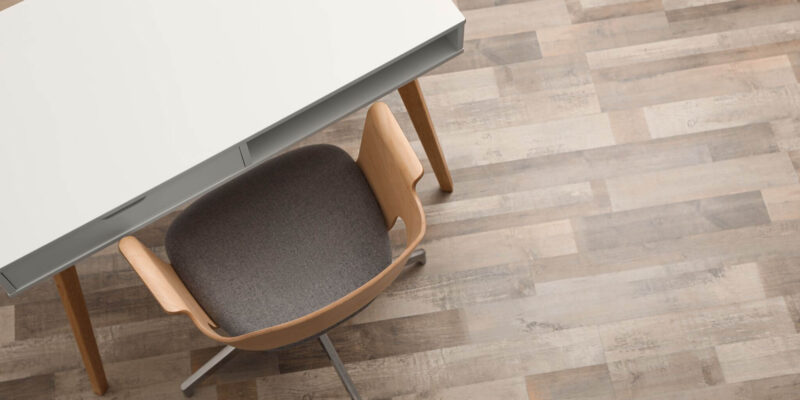
Commercial and multi-unit flooring is moving toward products that can handle demanding installation schedules without sacrificing design quality. For contractors and installers, that shift makes vinyl flooring especially relevant.
LVT and rigid-core formats such as SPC and WPC continue to gain ground because they combine practical performance with realistic wood visuals, manageable installation, and specification flexibility. In multifamily work, LVT has become a leading hard-surface choice, while thicker LVT and WPC are often used when a project calls for a more substantial feel or upgraded finish.
Warm Wood Tones Are Replacing the Gray Default
One of the clearest design changes is the move away from cool gray and overly uniform visuals. Warm oak, honey, beige, taupe, and medium-brown tones are becoming stronger choices for multifamily and commercial interiors. These colors give installers more ways to create a current, less institutional appearance.
For crews, the practical takeaway is to pay attention to pattern variation and plank repeat. A realistic wood visual depends on more than color. Grain detail, embossing, matte or low-sheen finishes, and varied plank faces can make a major difference once hundreds or thousands of square feet are installed.
Wide Planks and Cleaner Visuals Are Gaining Ground
Longer and wider vinyl planks are increasingly being specified where the goal is a cleaner floor with fewer visible joints. In multi-unit projects, that can help create a consistent visual language across apartments, corridors, leasing areas, and other spaces. Current multifamily coverage points to wider plank formats and restrained grain patterns as notable directions for 2026.
From an installation standpoint, larger planks make layout planning more important. Check room dimensions, establish starting points, and account for transitions before production begins. On repetitive unit plans, a standardized layout can help maintain alignment.
Rigid-Core Vinyl Is Staying Important
SPC and WPC remain central to the commercial and multifamily vinyl conversation. SPC offers a firm, dimensionally stable construction that can make sense for demanding areas and projects where a rigid floor is preferred. WPC provides a different balance, with a somewhat more forgiving feel and added underfoot comfort.
Rigid-core flooring is continuing to attract attention because of its dimensional stability and installation advantages in renovation and high-mobility applications.
The important point for installers is that neither should be treated as a universal answer. Subfloor flatness, moisture conditions, room size, temperature, expected traffic, locking system, thickness, and installation instructions all matter.
Texture Matters More Than Gloss
High-gloss flooring is giving way to matte and textured finishes. The change is partly aesthetic, but it also makes sense on active commercial floors because a lower-sheen surface can be less visually unforgiving when it comes to everyday marks.
Manufacturers are also putting more emphasis on surface texture that follows the printed wood grain. For installers, cartons should be inspected and planks blended from multiple boxes where appropriate. Following the manufacturer’s layout recommendations also helps prevent obvious color or pattern blocks across large installations.
Performance Specifications Are Becoming More Detailed
Project teams are looking beyond the basic label of “vinyl flooring.” Wear layer, overall thickness, core construction, acoustic properties, installation method, warranty requirements, and environmental documentation can all influence specification decisions.
For contractors, this creates an opportunity to get involved earlier in the process. Before ordering material, verify traffic expectations, substrate requirements, adhesive or locking-system requirements, and transition details. In multi-unit construction, also consider how the flooring will perform during repeated turnovers and furniture moves.
Installation Efficiency Is Part of the Trend
Commercial flooring trends are increasingly connected to labor efficiency. Faster installation can help keep a multi-unit schedule moving, but speed only helps when the installation system is appropriate for the site.
For large projects, crews should establish a repeatable process for substrate inspection, moisture testing, layout, cutting, expansion allowances, and final inspection. Keep extra material from the same product run when possible, label it clearly, and retain installation documentation. These steps can simplify future repairs and reduce unnecessary disruption during unit turnover.
Vinyl Does Not Mean One-Size-Fits-All
Vinyl remains popular because it can cover different project requirements without forcing every space into the same specification. A commercial project may use vinyl in high-use areas while pairing it with engineered hardwood or laminate where a different visual or performance profile is preferred. WPC and SPC can also serve different roles within the same multi-unit development.
The best approach is to match the product to installation conditions instead of selecting a floor based only on appearance or price. That helps crews protect labor, reduce avoidable callbacks, and deliver more consistent results across large footprints.
What These Trends Mean for Contractors and Installers
For flooring professionals, the current vinyl market rewards preparation as much as product knowledge. Strong results come from understanding the differences between standard vinyl, WPC, and SPC, reading technical specifications carefully, and planning the installation before material reaches the floor.
Supply should also be discussed early. Multi-unit projects can require substantial quantities of one color or construction, and substitutions can create problems with layout, transitions, and future repairs. Confirm availability, lead times, batch information, and spare-material needs before the installation schedule is locked.
Building Better Vinyl Specifications for the Next Project
Vinyl flooring trends for commercial and multi-unit projects are moving toward warmer visuals, wider planks, more convincing textures, rigid-core options, and specifications that place greater weight on installation conditions and lifecycle performance.
For contractors and installers, the job is no longer just about putting down a popular product. It is about selecting the right construction, preparing the substrate properly, and creating a repeatable installation process.
At Discount Hardwood Floors & Molding, we work with contractors and installers on WPC, SPC, laminate, engineered hardwood, and vinyl flooring. We can help you compare options, plan material requirements, and source flooring that fits the demands of your next commercial or multi-unit job. If you are preparing a bid or have an upcoming installation, contact us to discuss the project and build a flooring package around your schedule and specifications.